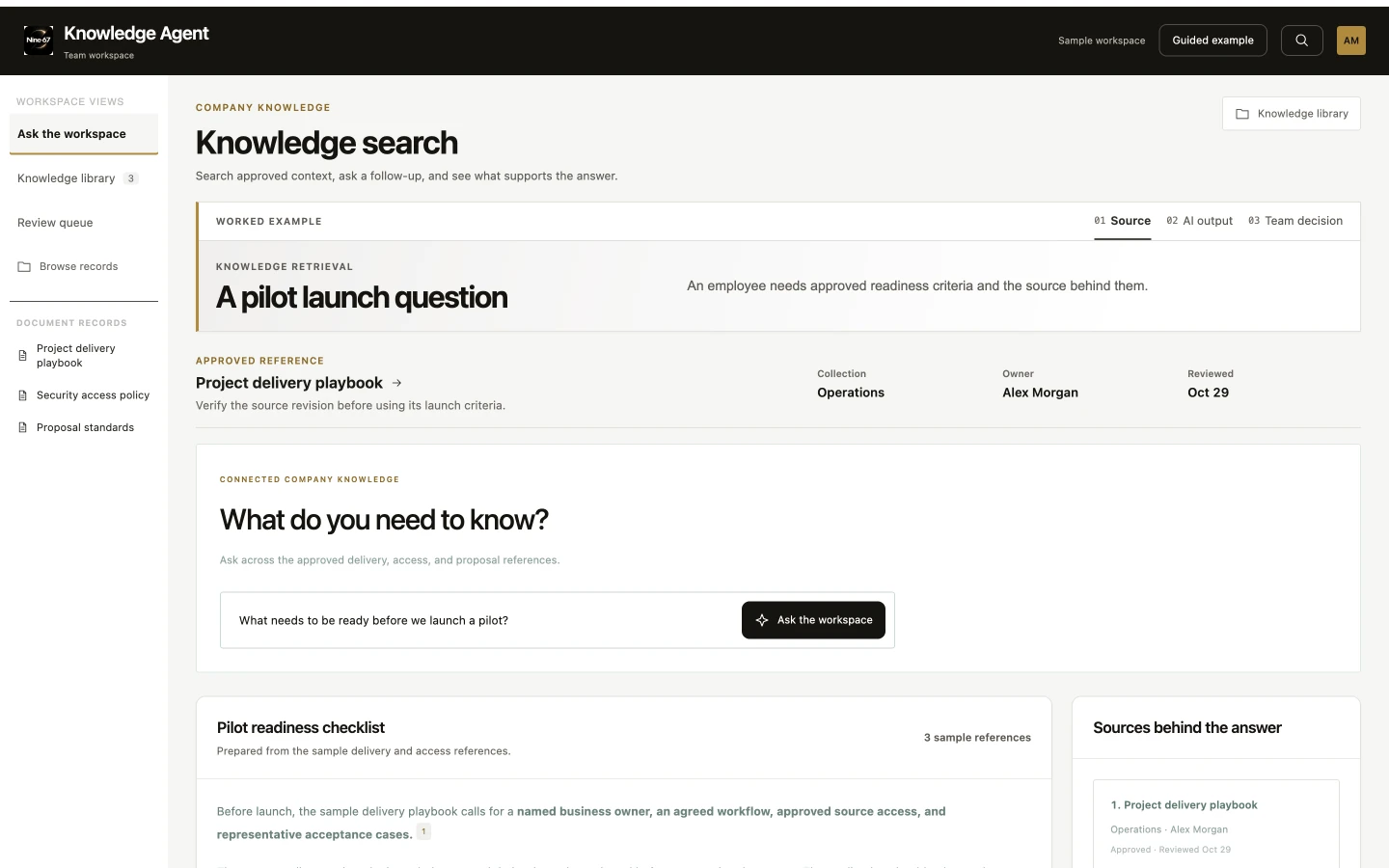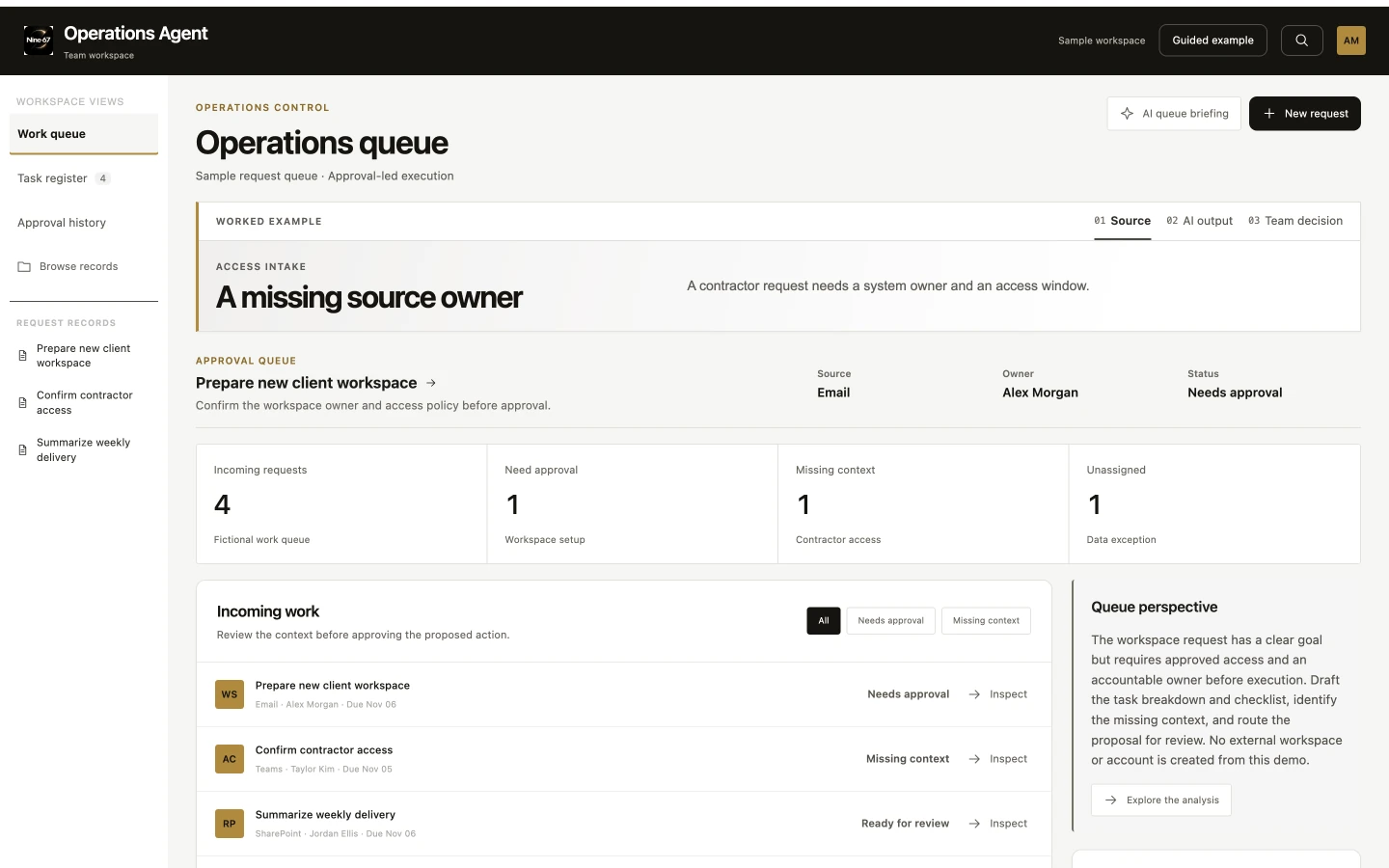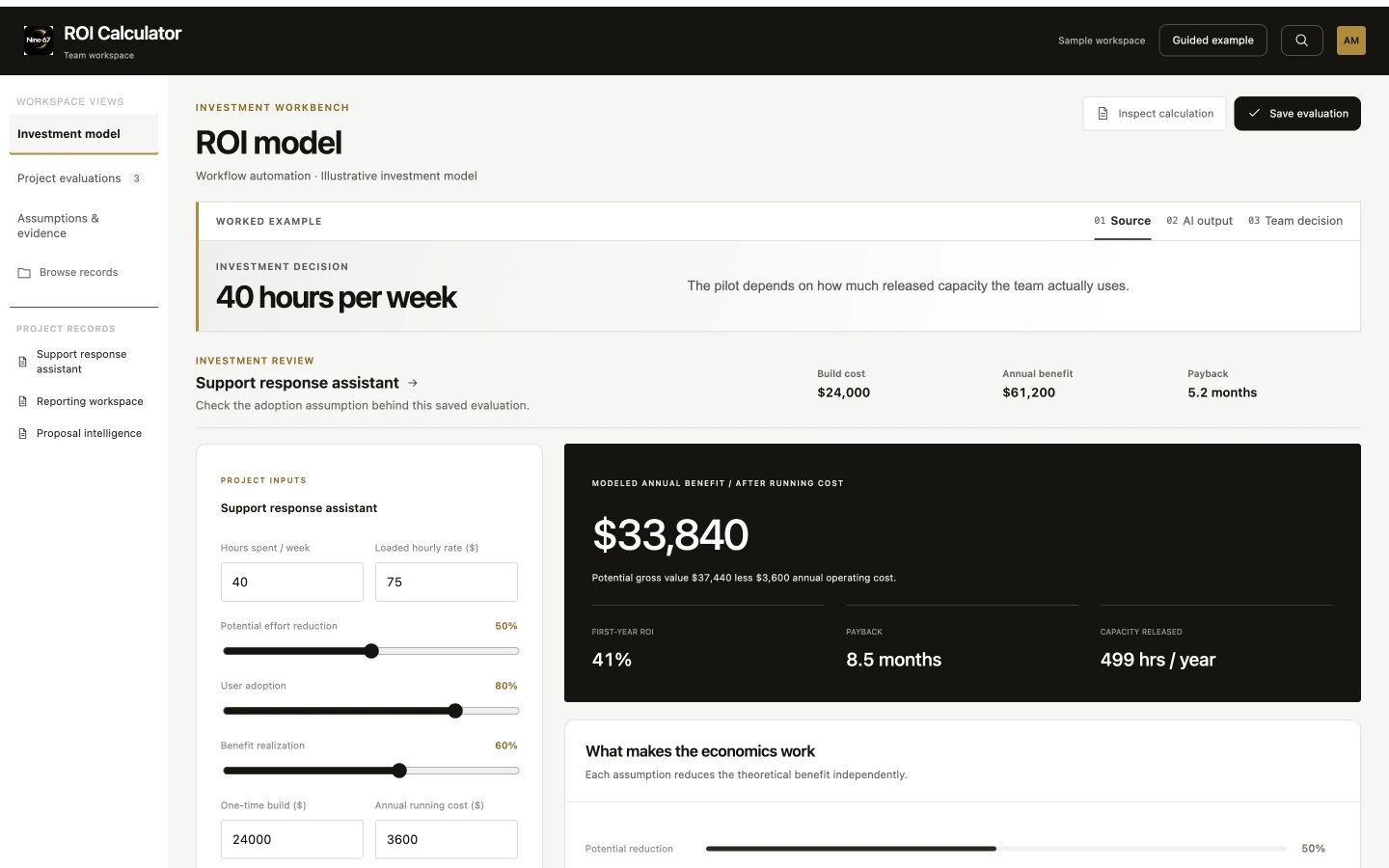
An AI operating layer is the set of connections that lets your AI applications work from the same data and hand work to one another. Sales, operations and finance each keep their own application. Underneath, they read the same customer records, follow the same permissions and report to named owners. Each new application starts from what the others already know.
What it replaces
Many companies arrive at AI one tool at a time. Sales gets an assistant for proposals. Finance gets one for reporting. Individuals find tools of their own. Each works, and none of them shares what it learns.
IBM surveyed 2,000 CEOs for its 2025 CEO study. Half said the pace of recent investment had left their organization with "disconnected, piecemeal technology." In the same study, 68% called an integrated, enterprise-wide data architecture critical for collaboration across functions, and 72% saw their own proprietary data as key to getting value from generative AI.
CEOs are describing the gap and the remedy in the same survey. The connections between the tools are the next piece of work.
Separate tools and connected applications
| Question | A separate tool in each department | Connected applications |
|---|---|---|
| Where does the data live? | Copied into each tool | Read from your existing systems, once |
| What happens when sales learns something? | It stays with sales | Operations and finance see it the same day |
| How does a new application start? | From nothing | From data and permissions already in place |
| Who owns each tool? | Whoever set it up | A named owner, on one shared list |
| Who can see what? | Set tool by tool | Your existing permissions, applied everywhere |
| What gets measured? | Activity in each tool | The business result the work was meant to move |
What does it look like in practice?
Take an illustration. A client emails to ask whether their order will arrive on time.
With separate tools, an account manager uses an assistant to draft a reply, then goes looking: the order system for the status, a spreadsheet for the production date, a message thread for the last update. The draft was fast. The answer took the afternoon.
With connected applications, the same question pulls the order status, the production date and the latest update together. The reply is drafted with its sources attached. The account manager checks it and sends it. If the date has slipped, operations sees the same flag at the same moment, and finance sees the effect on the month.
The people and their judgment are the same. The work now reaches them already joined up.
Why does the work itself have to change?
Adding AI to a step makes that step quicker. The larger gain comes from changing how the steps join up. Deloitte surveyed 3,235 leaders for its State of AI in the Enterprise report, published in January 2026. It found that 30% of organizations are redesigning key processes around AI. Another 37% use it at a surface level, with little or no change to the underlying process.
An operating layer is how you join the first group. It gives you a place to redesign a handoff once and have every application respect it.
What are the parts?
You need three things, and you probably have the first already.
Your systems of record. The CRM, the finance system, the project tools and the shared drives stay exactly where they are. Applications read from them. Nothing is migrated.
One shared list. Every AI application appears on it with its owner, the data it reads and what it may do. This list is what turns separate tools into something you can govern.
One rule for action. An application proposes, a named person approves, and the result lands in the software your team already uses, with an owner and a due date.
How do you start?
Start with one handoff. Choose the place where work waits longest between two teams: the weekly update assembled by hand, the quote that needs three people's input.
Connect the two or three sources that handoff depends on. Put one application on it, with a named owner. Measure the wait before and after.
Then choose the next handoff. The second application reuses the connections the first one made, so it arrives sooner. That reuse is the point of the layer.
Sources
See what we would build for your business. Book a meeting