Choose the AI partner who can show you how an application gets from a demonstration into daily use, and who agrees with you on the number that proves it worked. Six questions will tell you most of what you need to know. Each is below, with what a good answer sounds like.
Why the questions matter
Getting an AI pilot running is the easy part. Deloitte surveyed 3,235 business and IT leaders for its State of AI in the Enterprise report, published in January 2026. A quarter of respondents had moved 40% or more of their AI pilots into production. The same survey found that 30% of organizations are redesigning key processes around AI.
Those two findings point the same way. Value arrives when a pilot reaches production and the work around it changes. A partner's job is to get you there, so ask how they do it.
The six questions
| Topic | The question | What a good answer sounds like |
|---|---|---|
| Daily use | How does an application get from pilot into everyday work? | A named process: who they sit with, how staff are trained, what happens in the first month after launch |
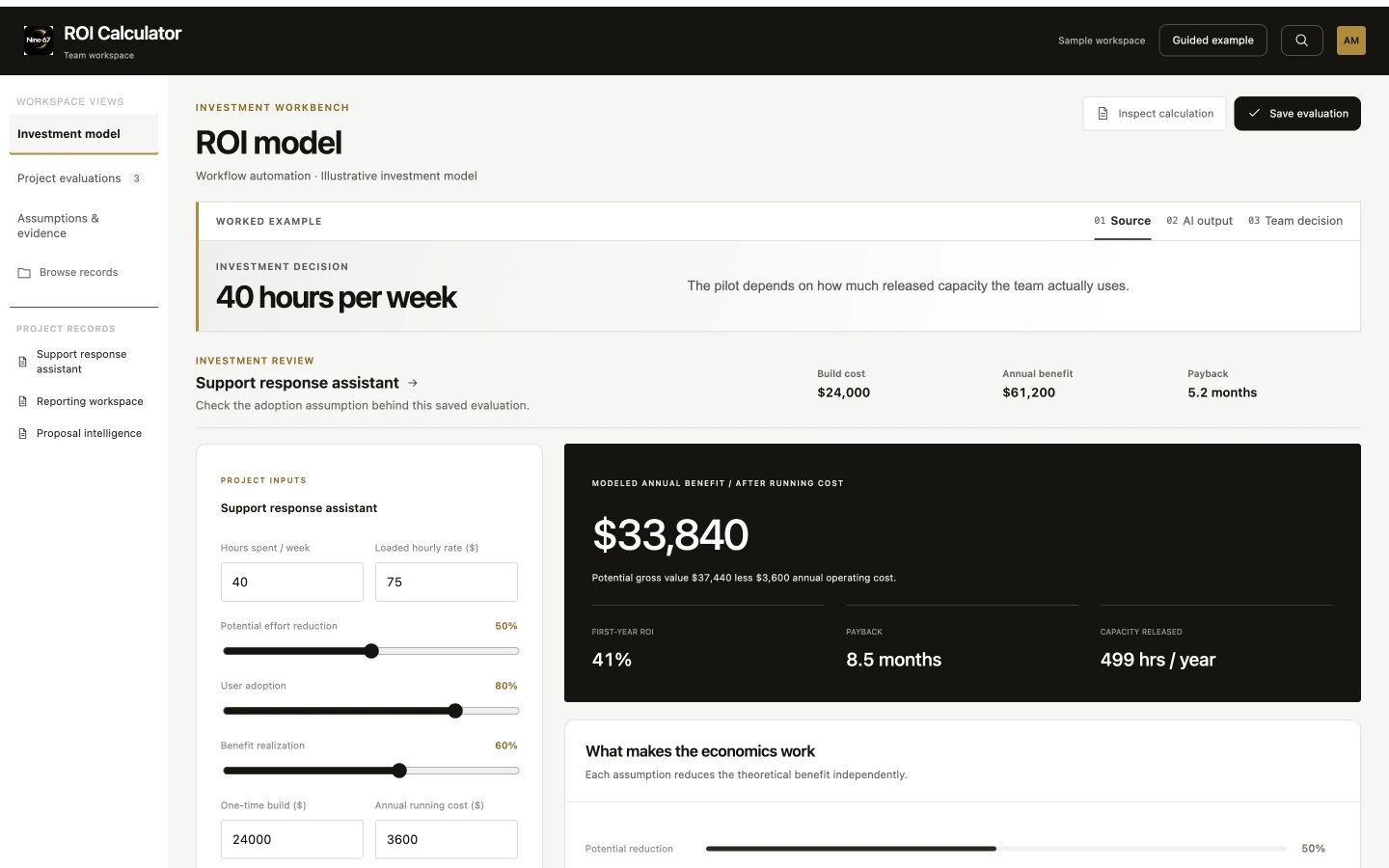
| Results | What will we measure, and when do we agree it? | One operating number, agreed before the build, with your baseline recorded first |
| Your data | Who owns our data, the outputs and the finished application? | You do, in writing. Your data is never used to train models for anyone else |
| Security | Who can see what, and how is that controlled? | Access follows your existing permissions, with a written policy they can show you |
| Your people | Who works with our team, and who decides? | Named people who work beside your staff. Your people approve every output that matters |
| Proof | Can we see it working on work like ours? | An application you can open and use, built around a comparable workflow |
Why ask who owns the data?
Your own records are where the value is. In IBM's 2025 study of 2,000 CEOs, 72% called their organization's proprietary data key to getting value from generative AI. The same study found that 68% see an integrated, enterprise-wide data architecture as critical for collaboration across functions.
So get the answer in the contract. You should own your data, everything the application produces and the application itself. Ask directly whether your data is used to train or improve models for other customers.
Why ask about access controls?
On security, start with access control. IBM's 2025 breach report found that 13% of organizations had reported a breach of an AI model or application. Of those, 97% lacked proper AI access controls.
A strong partner will tell you plainly how the application inherits your existing permissions, so that a person sees through the AI only what they are already allowed to see. If you want a common reference, the US National Institute of Standards and Technology publishes a voluntary AI Risk Management Framework. Ask how their practice maps to it.
What should you see before you choose?
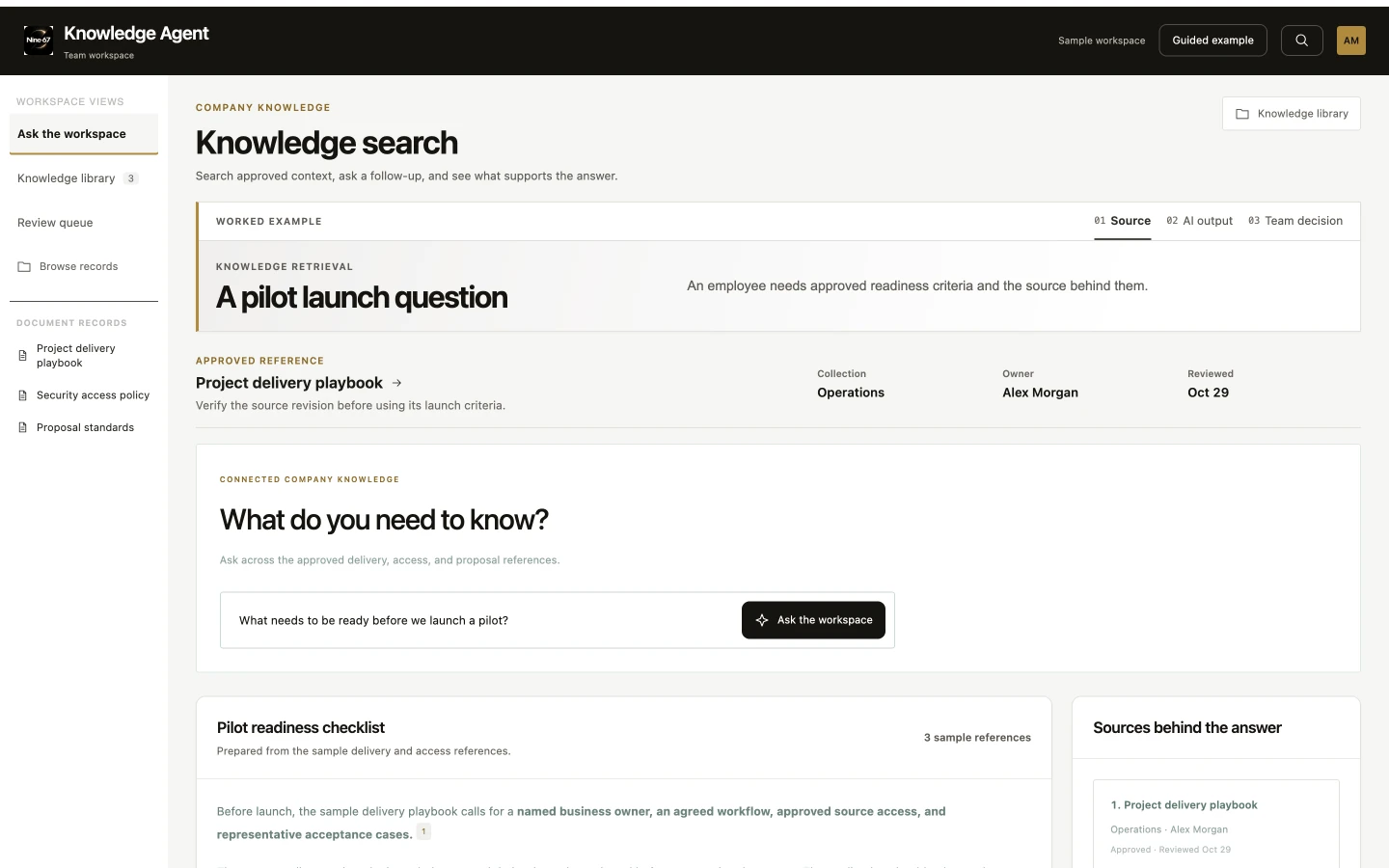
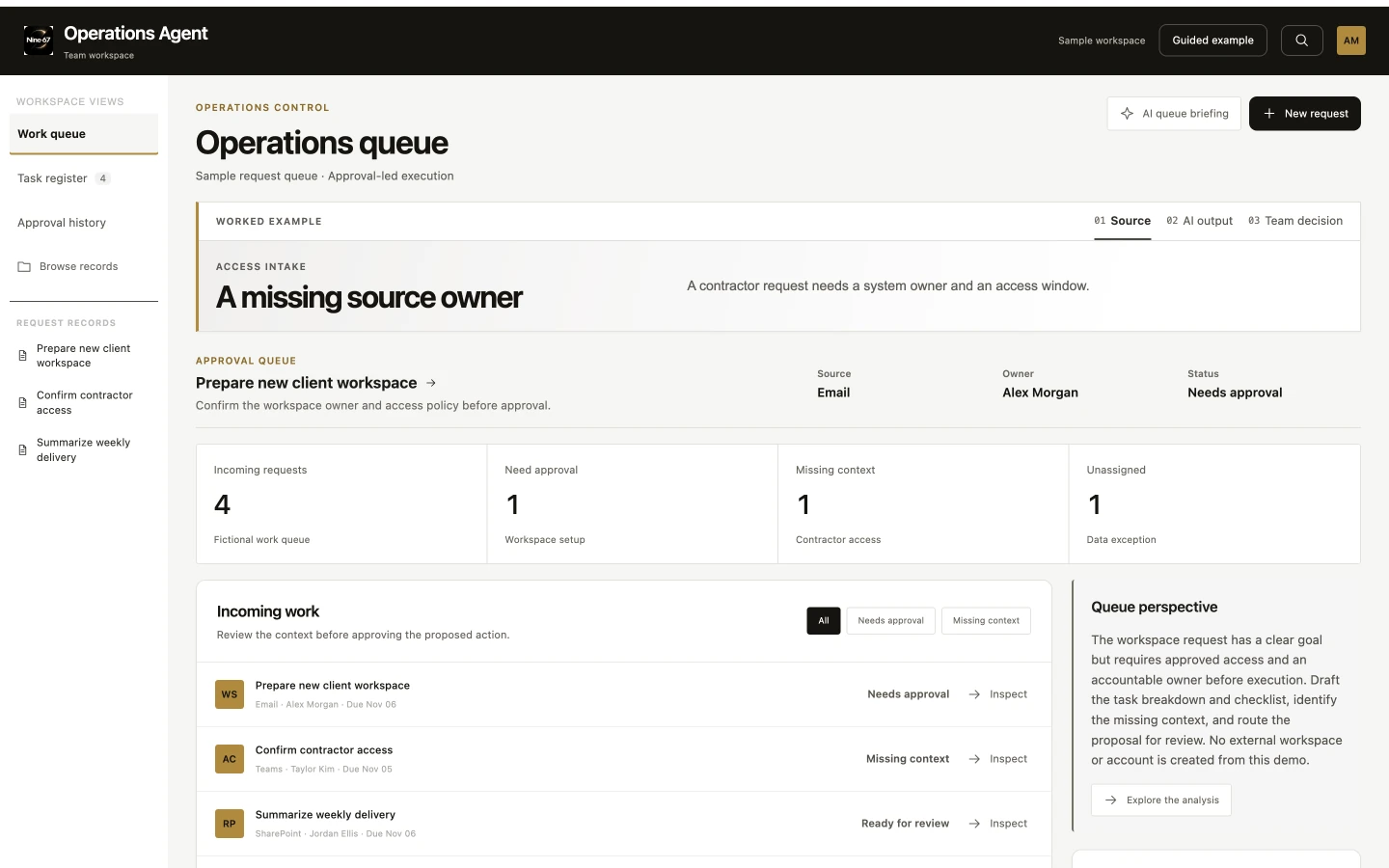
Ask to use something. A demonstration you watch tells you what the software can do. An application you open yourself, on a workflow like yours, tells you how it would feel for your team on a Tuesday afternoon.
While you use it, look for three things:
- Every answer shows where its information came from.
- A person approves anything that leaves the building.
- The data in front of you is clearly marked as sample data.
How to run the conversation
Bring one real workflow to the first meeting: the report that takes two days, the proposals that wait on one expert. Ask the six questions about that workflow. The answers become specific very quickly, and specific answers are easy to compare.
By the end you should hold a short plan on one page: where AI helps in that workflow, who stays involved and how you will measure the result. That page is the basis for a decision you can explain to your board.
Sources
- Deloitte: State of AI in the Enterprise 2026
- IBM: CEO study, 2025
- IBM: Cost of a Data Breach Report 2025, findings on AI
- NIST: AI Risk Management Framework
See what we would build for your business. Book a meeting