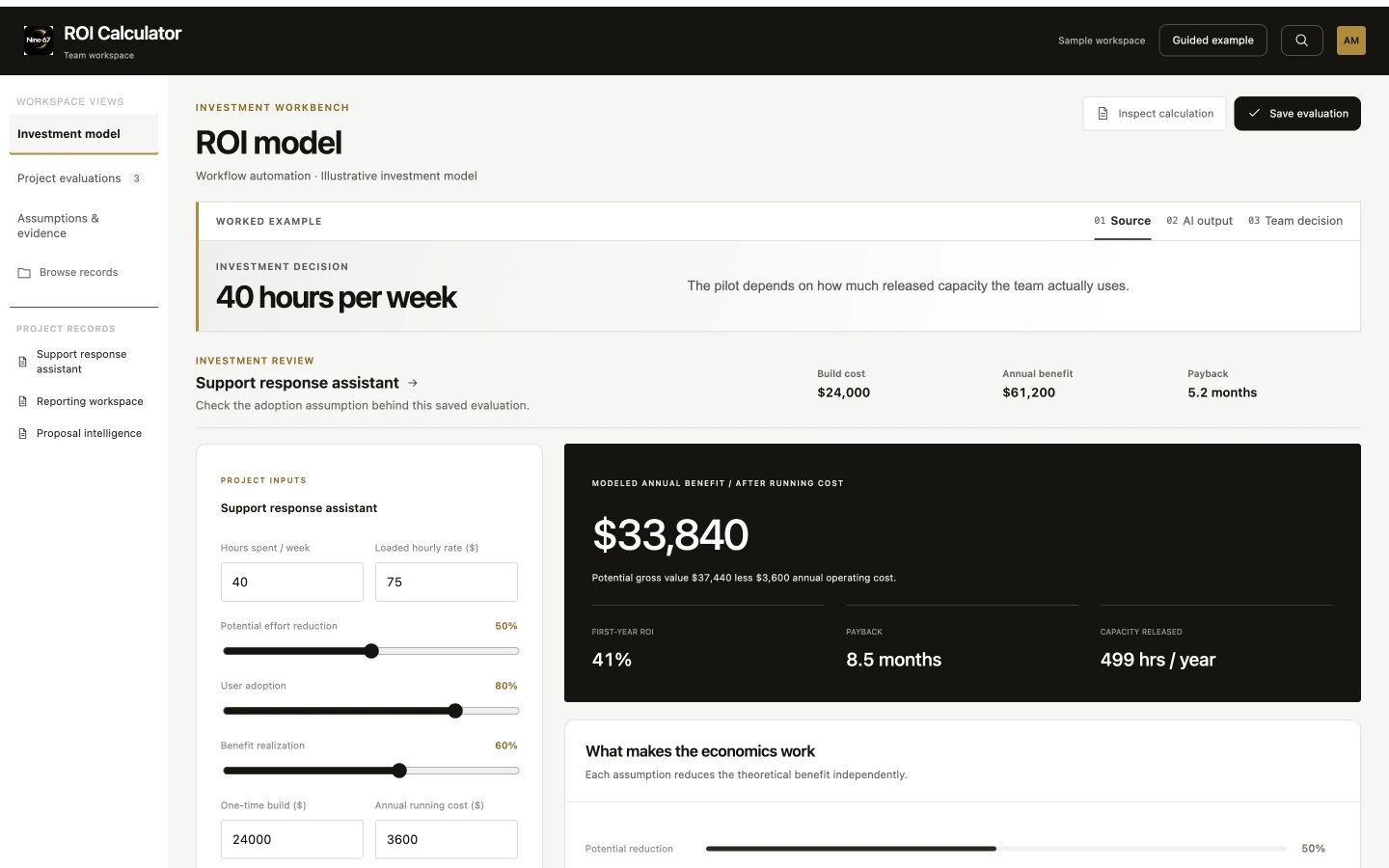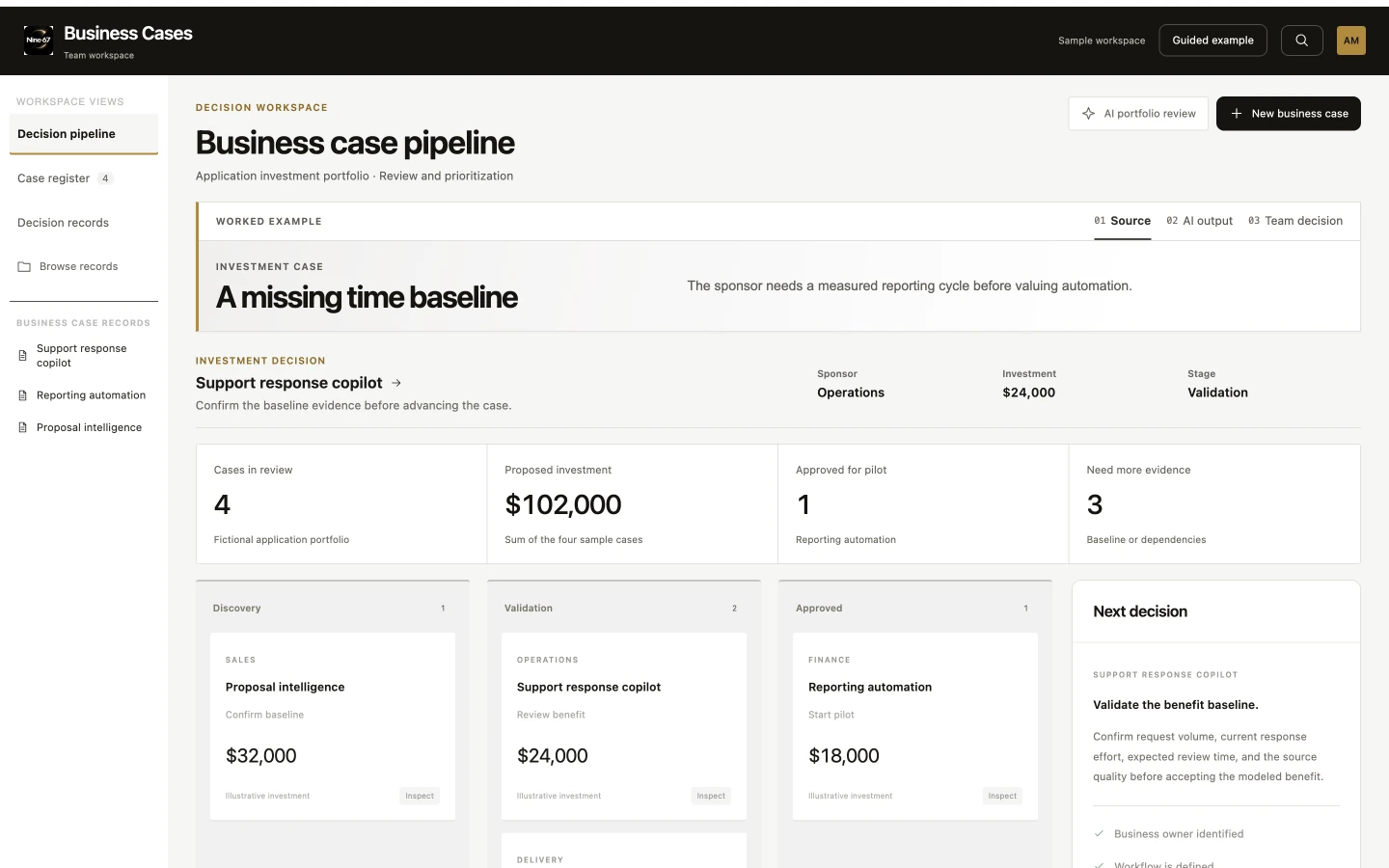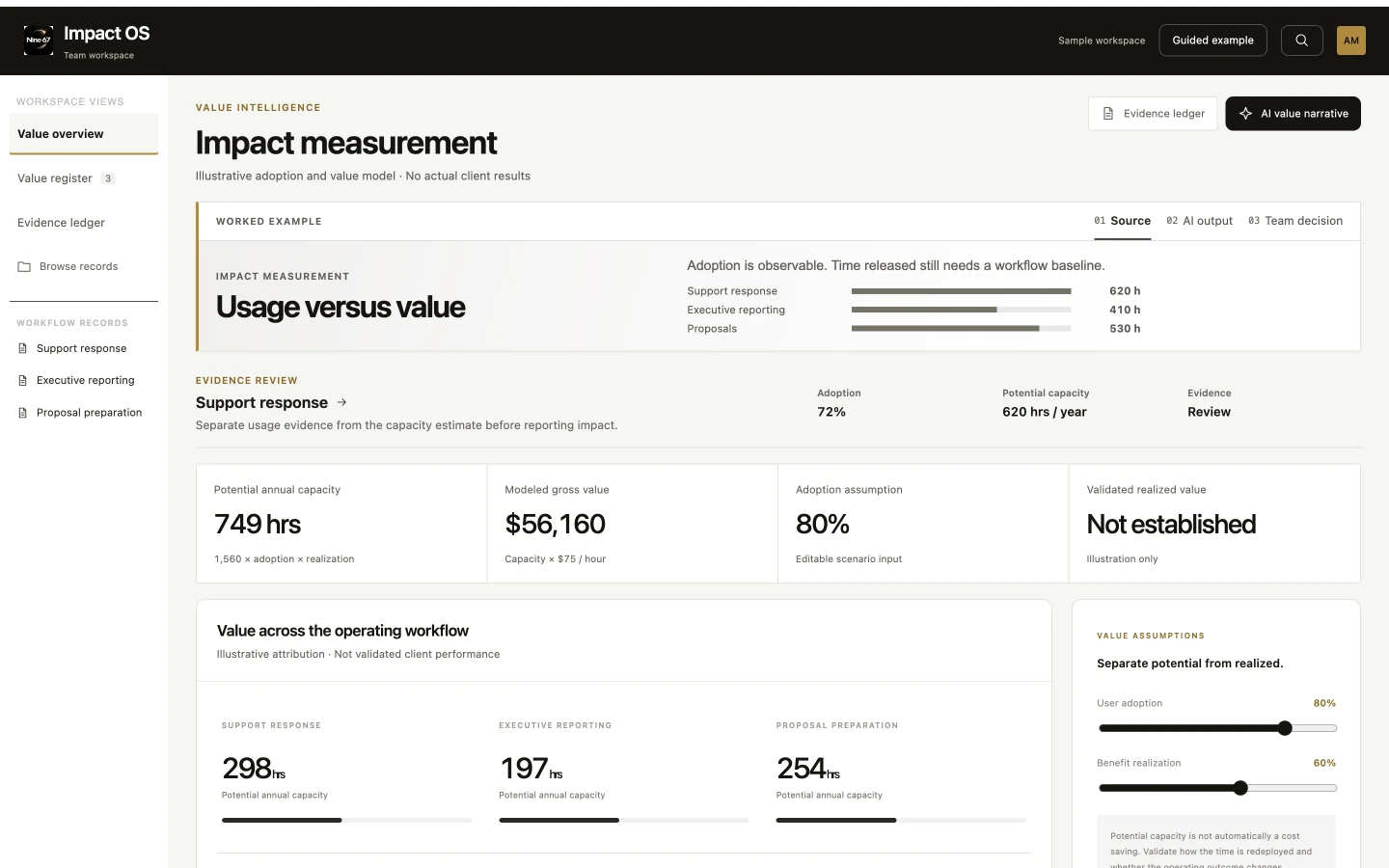
Give every AI initiative 90 days to show its return on your monthly management review. Each one goes on that review as a single line with four items: what it cost this month, the one operating number it was bought to move, what each step in that number is worth in dollars, and the person who owns that number. By the third review, an initiative keeps its budget when the dollar value of the move in its number is larger than what it cost.
What surveys say about AI returns
In an EY survey published in July 2026, 98 percent of senior leaders at organizations investing in AI say they have seen a positive return. In the same survey, 82 percent say their organization is concerned about AI token usage and related costs, meaning what AI tools charge each time they are used.
Gartner finds a gap between spending and evidence in operations: 55 percent of chief supply chain officers are unclear on the return of their AI investments, even as 67 percent of supply chain digital investment now goes to AI.
Put each initiative on the monthly review
Use the review your leadership team already runs after the monthly close, next to revenue, margin and cash. Each AI initiative gets one line with four entries.
The cost is everything the initiative spent that month: licenses, usage charges, and the hours of the people running it. The number must be one the business already tracks, such as days to close the books, quote turnaround, order error rate or days sales outstanding. The value is what each step in that number is worth in dollars, because a faster close is not a return until someone prices it. The owner is the person accountable for that number today, whether or not they run the AI project.
For a distributor, the line for an order-entry assistant might read: cost, the license plus the hours of the two people maintaining it; number, the order error rate; value, what each point of error rate costs in credits and reshipping; owner, the customer service manager. An initiative that cannot yet fill in all four entries gets those entries first.
What if the AI is meant to improve decisions?
In a Gartner survey of 204 finance leaders, 45 percent of finance AI investments lean toward productivity, while 20 percent of finance AI projects lean toward decision quality. McKinsey's analysis argues that AI's largest gains "rarely come from labor savings alone. They come from faster decisions, better use of existing assets, and opportunities that would otherwise be missed." When an initiative exists to improve a decision on pricing, inventory allocation or which supplier gets the order, put the outcome of that decision on the line instead of the hours saved.
Sources
- EY: 98 percent of senior leaders at organizations investing in AI say they have seen a positive return
- Gartner: 55 percent of chief supply chain officers are unclear on the return of their AI investments, even as 67 percent of supply chain digital investment now goes to AI
- Gartner: 45 percent of finance AI investments lean toward productivity, while 20 percent of finance AI projects lean toward decision quality
- McKinsey: "rarely come from labor savings alone. They come from faster decisions, better use of existing assets, and opportunities that would otherwise be missed."
See what we would build for your business. Book a meeting