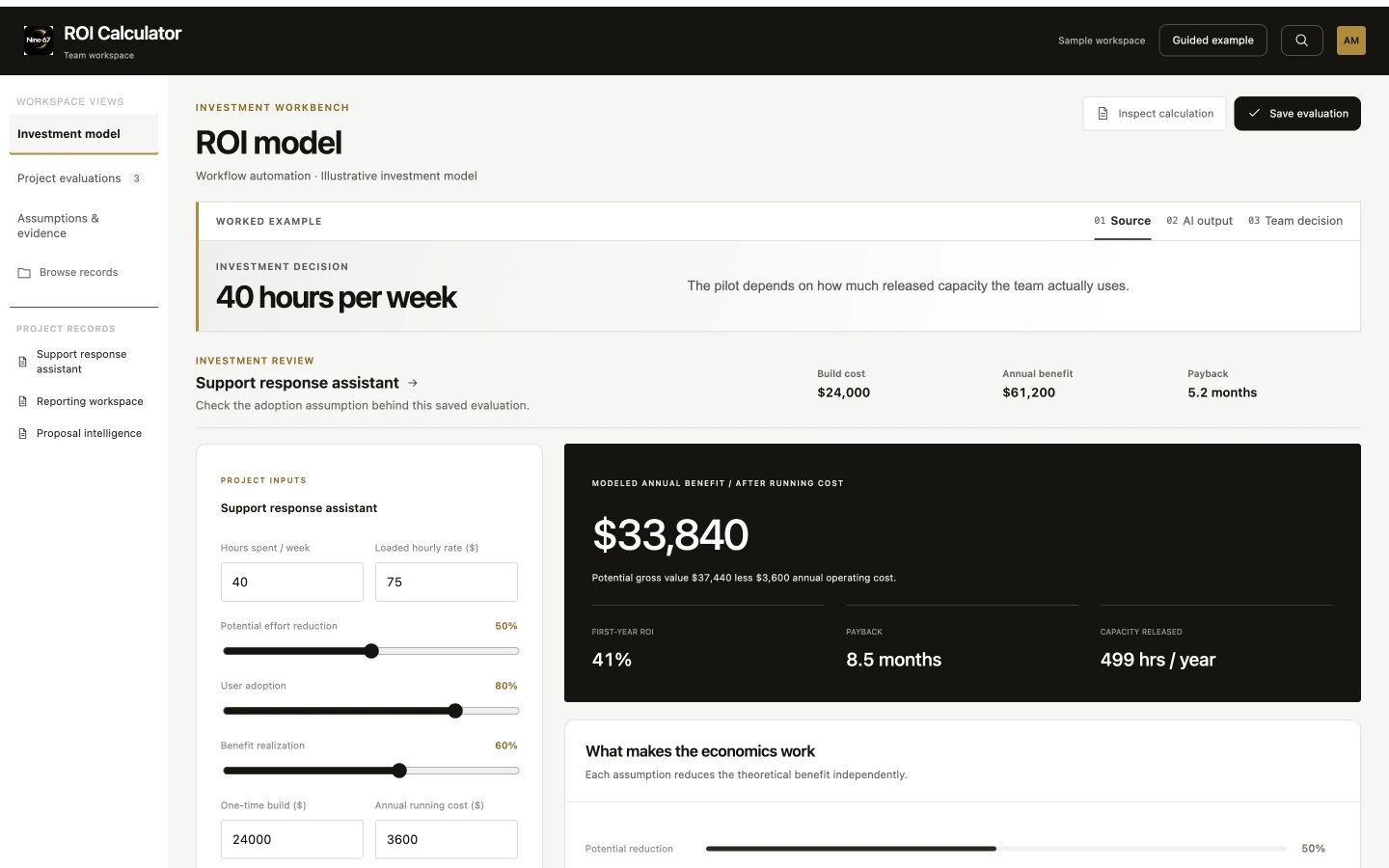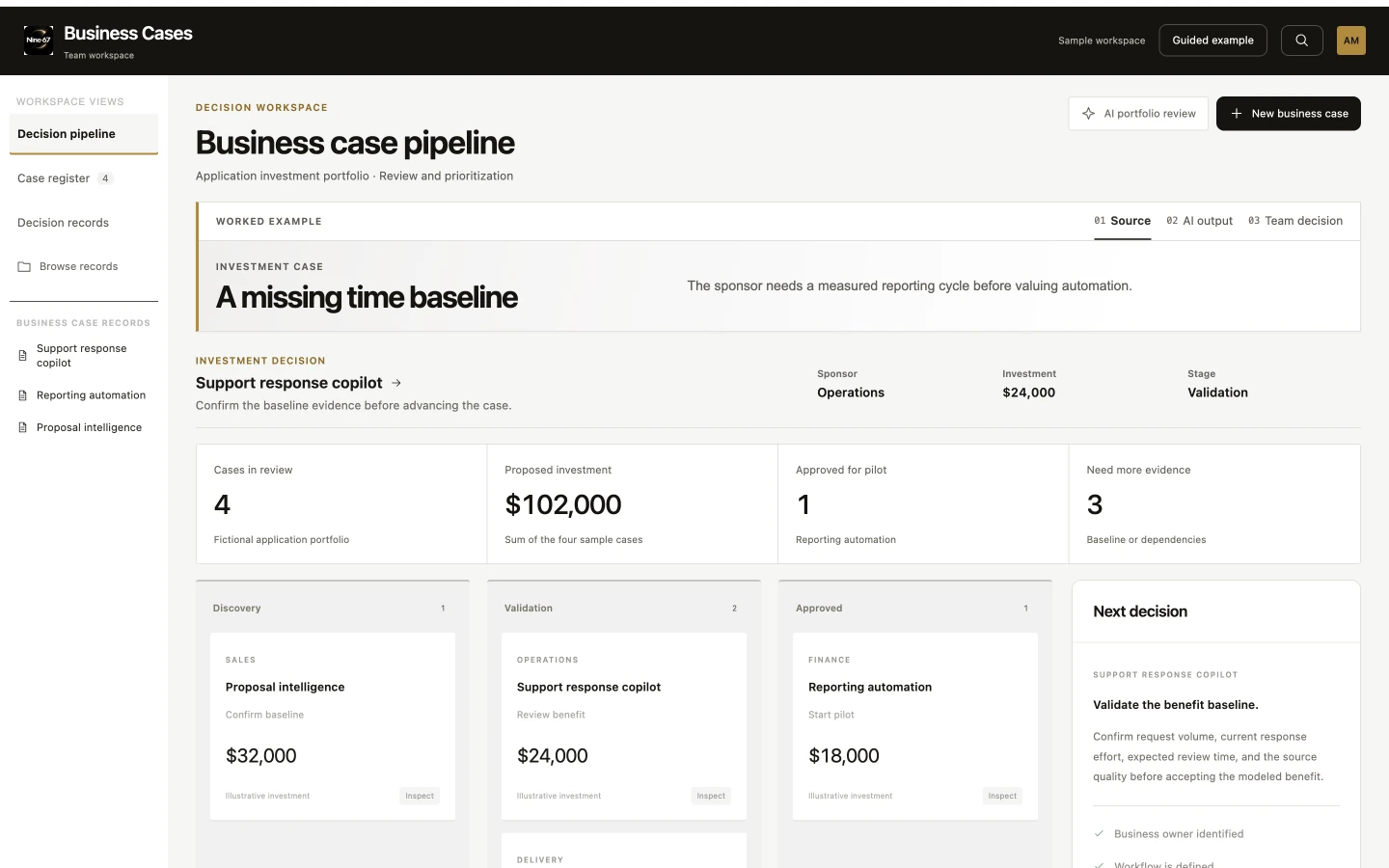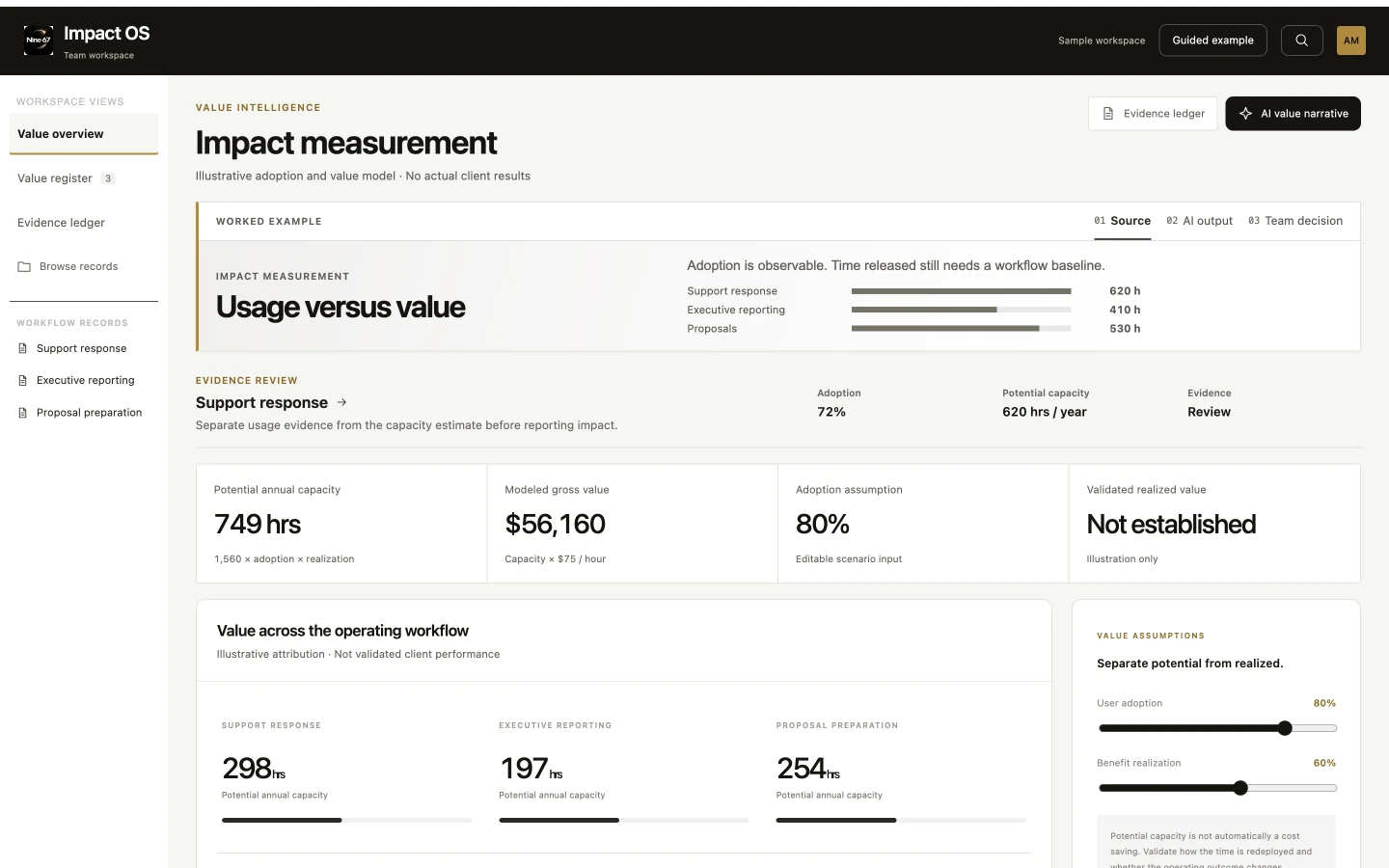

Measure both. If your AI business case measures only the hours your employees could save, it leaves the commercial value of that additional capacity unmeasured.
In Wharton's 2026 AI Adoption Report, 52% of managers and senior leaders named productivity or cost reduction as the primary job for AI over the next 12 to 24 months. 22% named growing the business.
Yet departments tracking at least one growth measure were nearly three times as likely to report strongly positive returns as those tracking efficiency alone: 35% against 13%.
The findings establish an association between how businesses measure AI and the returns they report. They raise an important question about how leadership teams define success.
What most leaders expect
Savings are real, and they usually arrive first. In IBM's 2025 study of 2,000 CEOs, 85% expect their investments in scaled AI efficiency and cost savings to have returned a positive result by 2027. For investments in scaled AI growth and expansion, the figure is 77%.
Deloitte's 2025 survey of 1,854 executives adds context. The companies it rated as leaders on AI returns were more likely to name "creation of revenue growth opportunities" as their most important win, at 49%.
How one business turned saved hours into additional revenue
A claims team captured every claim by hand. The work took two employees about seven hours a day between them.
Nine-67 built an application that reads each claim as it arrives by email and captures it in the team's own system. The team now handles 600 to 800 claims in higher-volume months, up from 70 to 150 a month, with the same people.
The application increased processing capacity and freed the two employees to deliver an additional paid service. The business now handles higher volumes and has a further source of revenue, using its existing team.
A business case built on hours saved would have counted seven hours a day. The result the business cares about is the higher claim volume and the new service.
Read the full claims case study
Every efficiency gain creates a decision
If AI returns seven hours of employee capacity each day, the business can use that capacity in several ways. It can reduce costs, absorb rising demand, improve customer service or introduce new revenue-generating work.
Each option has a different financial outcome. The value of AI depends on what the organization does with the capacity it creates. That decision belongs in the original business case.
Growth has its own limits. New capacity needs customer demand to fill it, and extra revenue is worth only the profit it leaves. A complete business case states those assumptions plainly, so the finance team can test them.
Five questions for the business case
- What does the process cost today?
- How much capacity could AI release?
- What could the business do with that capacity?
- What additional profit or savings could realistically result?
- What will it cost to build and to run?
The first two questions give you the efficiency gain. The third and fourth give you the commercial value. The fifth tells you whether the return justifies the investment.
Build the business case around the full commercial opportunity. Measure the efficiency gains, decide how the released capacity will be used, and track the financial results.
Before you approve the next project
Ask what your business could accomplish with the capacity it stands to gain. Your existing team may be able to serve more customers. It may be able to carry a service you have wanted to offer.
The answers set the true size of your AI business case.
Sources
- Wharton Human-AI Research and GBK Collective: 2026 AI Adoption Report
- IBM: CEOs double down on AI while navigating enterprise hurdles
- Deloitte: AI ROI, the paradox of rising investment and elusive returns
See what we would build for your business. Book a meeting