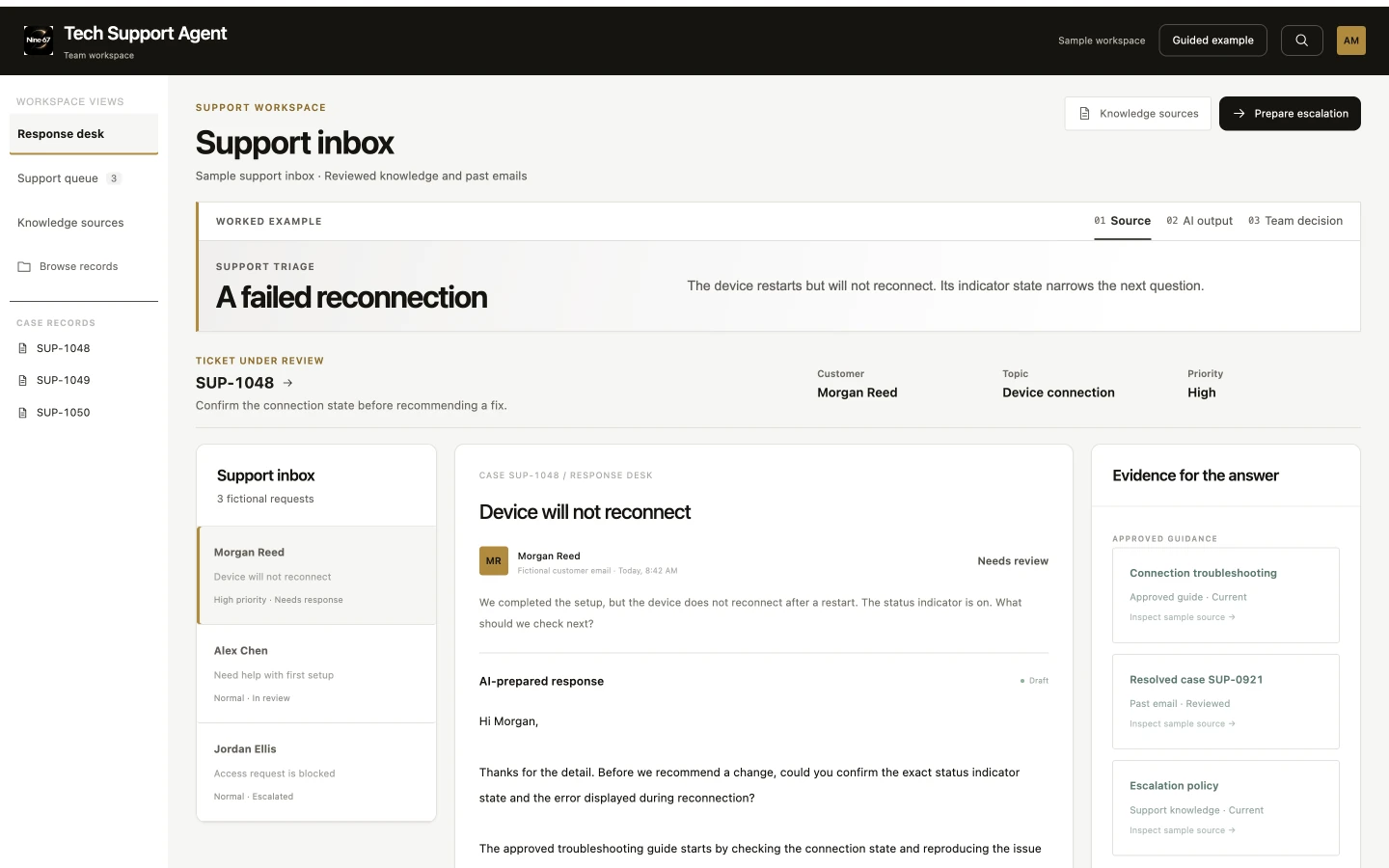
Your support team already counts its work: tickets, by product, every week. That makes support the place to start with AI. Next year's support hiring plan is where the hours AI frees should show up.
Why support cost matters to gross margin
Support cost sits in cost of revenue, inside the gross margin a buyer of the company reads first. The 2026 SaaS & AI Performance Benchmarks from Aleph and Benchmarkit, published June 1, 2026, draw on full-year 2025 results from 342 B2B SaaS and AI-native software companies. The median software gross margin is 80%, and AI costs have not dented it at the median yet. The blended margin on total revenue, with services included, slipped modestly from 77% to 76%, likely transitional cost from integrating AI.
A separate survey, of 321 customer service and support leaders worldwide across industries, run September through October 2025 and published April 28, 2026 by Gartner, which sells research and advisory, found 85% expanding human agent responsibilities as AI reduces contact volume.
Count the tickets before any tool arrives
Count the tickets before any tool arrives, so a saving can be told apart from a cut. In month one, the head of support exports a year of tickets by product, category and handle time. The VP of engineering ties each week's tickets to that week's releases. The CFO ranks categories by tickets times handle time for each product, never on a blended total. The head of support removes any category that has no written answer or needs a change inside the customer's account.
Start with one category on one product
In month two, AI drafts the reply on the top category of one product, and a support agent sends it. The head of support reads every reply in the first week. If closed tickets per support agent fall, the tool goes no wider until they recover.
How should you measure the result?
In month three, the head of support compares closed tickets per agent per week and the reopen rate on that category with the same category on the other products over the same months. The release log explains any spike. A deflection target, meaning the share of tickets resolved without reaching an agent, can be met just by closing tickets, so keep counting reopens. The CFO then sets the hours freed, and the tool's fee, against next year's support hiring plan.
The tool's fee, whether charged per seat or per resolved ticket, is booked in cost of revenue beside support salaries. Your general counsel checks customer contracts and data processing terms before ticket text goes into any tool. With those checks done, one category on one product shows in three months what the rest of the queue is worth.
Sources
- getaleph.com: 2026 SaaS & AI Performance Benchmarks
- Gartner: 321 customer service and support leaders
See what we would build for your business. Book a meeting