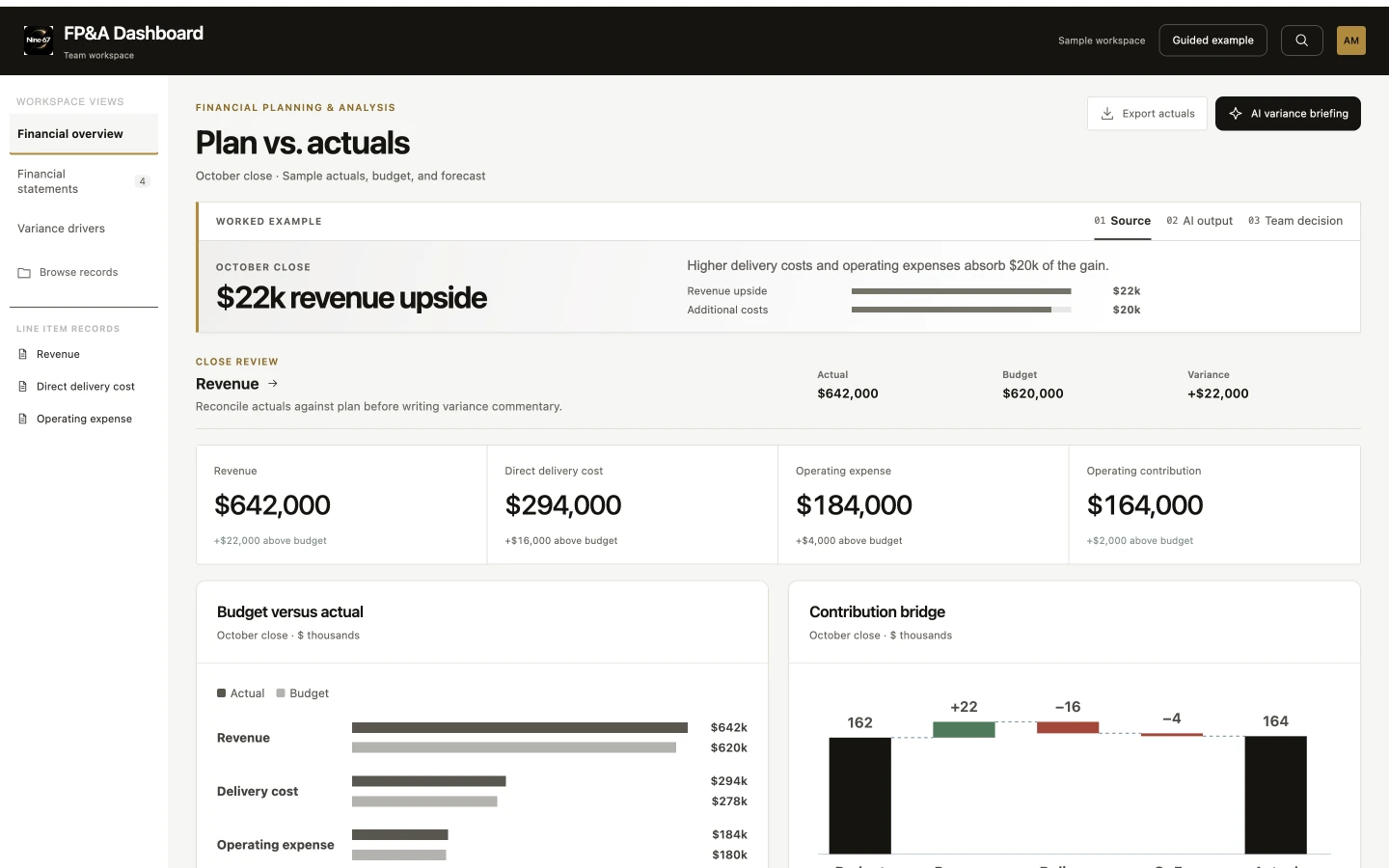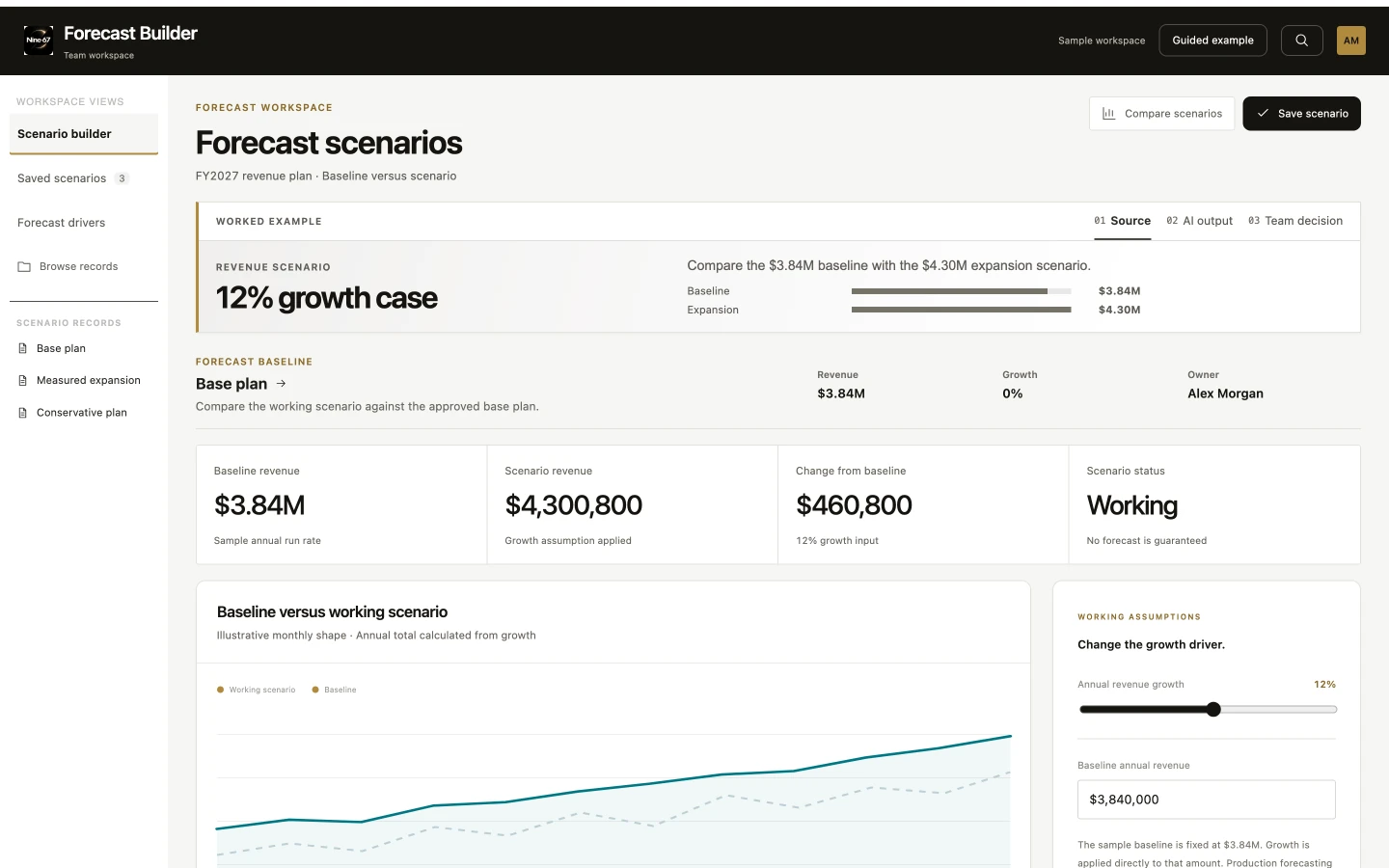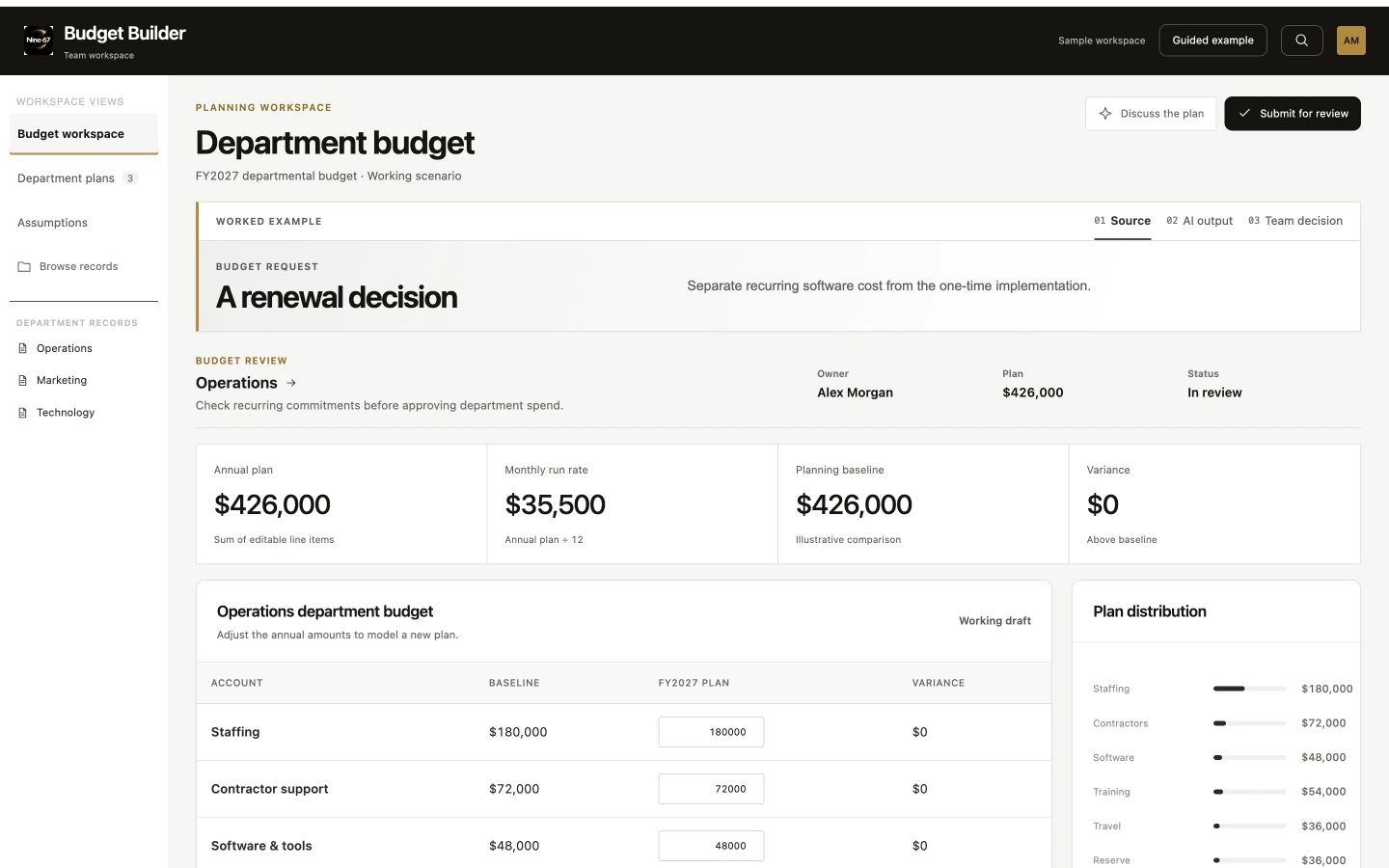
An AI assistant can answer a board member's question about recurring revenue in seconds. Whether that answer matches the board pack depends on one thing: a single written definition of each number, kept where every reporting and AI tool reads it. For a SaaS company four definitions matter most: ARR (annual recurring revenue), net revenue retention (this year's recurring revenue from last year's customers as a share of what they paid then, after upgrades, downgrades and cancellations), gross margin and customer. Agree them with your finance team first.
BCG surveyed 1,250 senior executives who make AI decisions, across nine industries and 68 countries, for The Widening AI Value Gap in September 2025. BCG sorts companies into four AI maturity stages. It found that more than 50% of future-built firms operate on a single enterprise-wide data model, compared with just about 4% of their stagnating peers. Future-built is its top stage and stagnating its bottom one.
Write the four definitions first
Write the four definitions first, one entry each. Each entry names the rule, the system and field it is computed from, the owner, and the effective date.
The ARR entry decides whether monthly contracts are annualized, whether a signed but unbilled contract counts, and on which date a cancelled customer leaves. The net revenue retention entry names the cohort and the period. The gross margin entry says whether hosting, third-party software inside the product and customer success sit in cost of revenue. The customer entry says whether a customer is a billing account or a parent legal entity, and which ID joins it across the billing system and the CRM.
At a company with two products, the customer entry might read: a parent legal entity with at least one active subscription on either product, joined across billing and CRM by one customer ID; owner, the controller; effective, the first day of the next quarter.
Give the work three months
Then give the work three months. In the first, you, the chief revenue officer and the head of customer success sign the four entries, and you settle any disagreement. In the second, your data team loads them into a semantic model, a shared dictionary of business terms that reporting tools read. TechTarget describes these as metadata management tools that enable organizations to define key metrics and standardize the terms that describe their data. The board pack, the BI tool and the assistant all read that model, and the assistant reads nothing else.
In the third month, the head of FP&A asks the assistant every question from the last two board meetings and compares each answer with the board pack. A disagreement goes back to the entry, and you sign the changed one. If you already run an assistant, follow the same three months. Log its board answers from day one, and answer board questions from the board pack until the comparison is done.
What happens when a definition changes?
A changed definition applies only from its recorded effective date. Earlier periods keep the old definition, so figures before and after that date are not directly comparable.
After the three months, the board pack, the BI tool and the assistant all answer from the same signed definitions, and you sign any change to one.
Sources
- BCG: more than 50% of future-built firms operate on a single enterprise-wide data model, compared with just about 4% of their stagnating peers
- techtarget.com: metadata management tools that enable organizations to define key metrics and standardize the terms that describe their data
See what we would build for your business. Book a meeting